This Saturday (12 October) in Riyadh, Saudi Arabia the match-up of the boxing year takes place. Two undefeated Russians with excellent amateur pedigrees will meet to determine the undisputed world light-heavyweight (12st, 7lbs/175lbs) champion.
Artur Beterbiev (20-0, 20 KOs) will bring the WBC, IBF and WBO belts to the ring, and Dimitry Bivol (23-0, 11 KOs) the WBA one, ultimately giving us our first undisputed champion since Roy Jones Jr. in June 1999.
Before then, Michael Spinks (above) was the only previous dominant 175 pounder way back in 1983 when the division was arguably at its most ‘hot’. Unifications here are rare and undisputed even more so.
The division, one of the original eight weight classes, used to be full of elite fighters who weren’t quite big enough for the heavyweights, but had no option but to campaign at 175lbs. The rollcall of great champions includes Ezzard Charles, ‘Ageless’ Archie Moore, Bob Foster, Matthew Saad Muhammad, the younger Spinks brother and Roy Jones Jr.
This is a ‘blue riband’ boxing weight category.
So, what can we expect Saturday ?
Beterbiev, at 39, from the former Soviet province of Dagestan on the Chechnyan border in the south of the Russian land mass, is a destructive box-puncher. Having had a tough upbringing under the Soviet system, being a former world champion, winning silver in London 2012 (his second Olympics) only then losing to current heavyweight king Oleksandr Usyk, the bearded Beterbiev is ‘authentically tough’.
As a professional he has stand out victories against Britain’s Callum Johnson, Smith and Anthony Yarde, stopping them all inside the distance. He can be dropped, but he’s always done the stopping in the end !
He is an intimidating character inside the ring with a confident calmness outside of it. In boxing exile, fighting out of Montreal, Canada, he is excellently trained by Canadian Marc Ramsay, one of the best in the sport.
The fight was originally pencilled in for earlier in the year, but delayed by Beterbiev sustaining a number of injuries and having his knee reconstructed in the process. This could be a telling factor.
Bivol, 33, is of mixed Russian/Korean heritage from the province of Kyrgyzstan. He too had an excellent Soviet amateur schooling, but although younger, was not as decorated as his opponent. The tall orthodox fighter does though hold an undefeated record that includes he stellar name of Saul ‘Canelo’ Alvarez, one of the modern greats.
The WBA champion has been flawless since winning the title in 2017 making 12 successful defences, and his win over ‘Canelo’ in May 2022 finally elevated him into the ‘SuperFight’ category and won him The Ring magazine 2022 Fighter of the Year.
Bivol is an excellent boxer and the more stylish of the two. He tends to box at range and probe to victory before unleashing his heavy artillery. Beterbiev, by contrast is equally talented, but likes to get amongst it by smothering his opponent with his work rate and power punches. Fighting him is likened to fighting someone in a phone booth.
The big questions as we approach first bell are; 1) How much has the injury record and ‘Father Time’ affected Beterbiev ? 2) What does he have left as he approaches the final years of his career ? 3) Will the intense pressure he will undoubtedly put on Bivol be too much for the Korean/Soviet ? 4) Can Bivol command Beterbiev’s respect early on and box his way to victory ? 5) Can the IBF champion really take a punch and Beterbiev’s power ?
It’s an intriguing matchup and as we point to has everything to be the Fight of 2024.
It will be shown in the UK on various platforms as a pay-per-view/box office option and in the USA on ESPN+. It is supported by an excellent undercard featuring Ring Magazine and world unified cruiserweight champion Jai Opetaia, promising British light-heavyweight Ben Whittaker, and world ranked middle/super-middleweight Chris Eubank Jr. It also features the heavyweight rematch between Fabio Wardley and Frazer Clarke, plus female WBC champion and Aussie Skye Nicholson.
It forms part of the Kingdom of Saudi Arabia’s Riyadh Season and is multi-promoted, including Top Rank Inc. and British-based outfits Queensberry, BOXXER and Matchroom Boxing.
With much hesitation, in the main event we predict a Beterbiev stoppage win late on. Enjoy the fireworks !
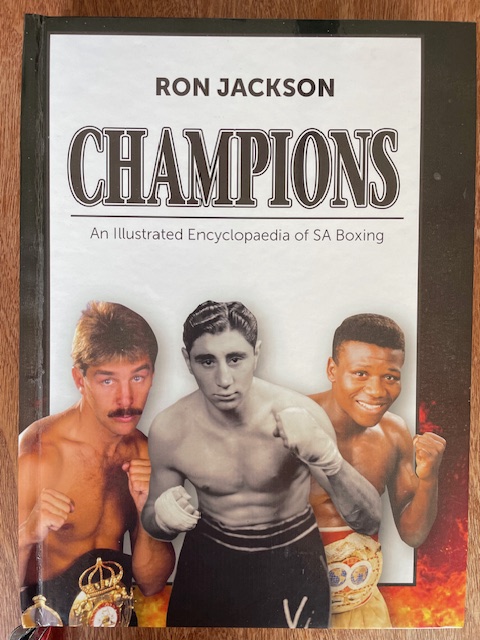
The first of a new feature of regular articles by esteemed South African boxing writer and historian Ron Jackson.
Famous old fight venues in London and South Africa
In the early years of British boxing there were many famous venues in London and amongst them was the famous Blackfriars Ring which was bombed down to the ground in the Second World War during the Blitz in October 1940.
The Ring was built as a Surrey Chapel in 1782 for the evangelical preacher Reverend Rowland Hill, and in the late 19th century it was occupied by an engineering company, and from 1910 it was used as a boxing venue.
The first fighter in The Ring in Blackfriars Road, Southwark back in 1783 was Reverend Rowland Hill who originally designed the building as a church so that he could fight the devil.
It is reported that that the unusual, circular design was that there would be no corners in which the devil could hide.
Many years later Dick Burge a former English middleweight champion was responsible for overseeing the chapel’s conversion to a boxing venue.
With his wife Bella’s support he rented the old circular chapel, which had fallen into disrepair and used as a warehouse.
Dick and Bella enlisted homeless people who cleaned out the building so that it could be used for boxing, which they opened on 14 May 1910.
Only four years after The Ring opened, The Great War erupted, and Dick enlisted but sadly he contracted pneumonia in 1918 and died shortly before the war ended.
However, Bella continued to run the boxing venue and she became the world’s first women boxing promoter.
In the late 1930’s with the clouds of the Second World War looming she ran into financial difficulties before the destruction of the venue.
Bella died at the age of 85 in 1962.
The bombed site was left abandoned until the 1960’s when a modern office block was built on the site, but by 1998 became derelict and replaced with modern building.
Right across the road where the original boxing arena stood is a pub named The Ring which hosts a collection of boxing memorabilia on its walls.
London also had several other famous boxing venues like The Harringay Arena, which was situated near Manor House, the scene of the first Freddie Mills vs Gus Lesnevich world light heavyweight title fight on 14 May 1946, with Mills being stopped in the tenth round. The arena could hold 11500 fans.
It was an almost ideal venue for boxing with banked terraces of seats surrounding the ring and above the ring were four huge clocks which timed the three-minute rounds and the one-minute intervals.
The old Wembley Arena holding 12500 fans was another wonderful structure with every spectator having a clear view of the ring. The only drawback was that it was situated on the outskirts of London.
The Empress Hall at Earl’s Court was also a fine venue for boxing, holding 10000 all under cover.
The Olympia was also a popular venue and the famous Royal Albert Hall with its lower and upper circles has been used for boxing until recently.
In London there were several other stadiums where big fights were held, including the White City Stadium and Wimbledon.
In many of the halls the seating was under cover and permanent so that that it would not involve the hiring of chairs other than transporting the ring and other appurtenances, which had to be done at the old Wanderers Stadium in Johannesburg when boxing was the home of all big fights in South Africa.
Possibly the most famous boxing small hall is the York Hall in Bethnal Green situated on Old Ford Road which was opened in 1929 and is still in operation today.
In South Africa there have also been some memorable boxing venues like the Wembley Stadium in the south of Johannesburg which also included a speedway track.
In one of the biggest fights in the history of South African boxing the popular South African heavyweight champion Johnny Ralph was knocked out in the eighth round by the world light heavyweight champion Freddie Mills on 6 November 1948 at the Wembley Stadium.
The stadium was subsequently demolished and is now used as a bus depot.
Close by is the Wembley Indoor Arena in Turfontein Road which was formerly known as the Olympia Ice Rink where many famous fights were held.
Another popular venues in later years was the Ellis Park Tennis Courts in Johannesburg.
Tournaments were also held at the Johannesburg City Hall and smaller tournaments were held at the Selbourne Hall, and Drill Hall.
Amongst the other venues are the Uncle Toms Hall, Kwa/Thema Recreation Centre, Sebokeng Community Centre, and the Mdantsane Indoor Centre (East London), Feathermarket Hall (the then Port Elizabeth), Portuguese Hall, Durban Ice Rink and the Nasrec Indoor Arena.
Promoters also used the Durban, and Cape Town City Halls and on 29 April 1995 South Africa’s Vuyani Bungu who holds the record for the number of world title defences by a South African retained his IBF junior featherweight against Victor Llerena at the iconic FNB Stadium.
A little over a week on, the dust has finally settled from the drama that unfolded in the heavyweight division on the stacked Wembley Stadium card in London, England.
The IBF heavyweight title fight resulted in Britain’s Daniel ‘Dynamite’ Dubois spectacularly retaining his title via a five-round demolition of fellow Londoner Anthony Joshua.
Dubois (22-2, 21 KOs) should continue to take all the praise, given where he’d come from with two earlier defeats and, he was a heavy betting underdog going in. The 27 year old from Greenwich, south London, came out from the opening bell full of confidence and intent and, after scoring a first knockdown of his opponent at the end of the opening round, never looked back. He ‘bossed’ his, ’til then more illustrious foe, from start to finish.
With exception of a temporary recovery from Joshua through rounds two to the eventual stoppage, Dubois was clearly the better man on the night. The counter right that finished the contest was one to behold and ranks as one of the more emphatic stoppages of recent times.
On the flip side, such was the nature of Dubois’ victory, scoring four knockdowns in the process, that media and fans questioned the point of a continuation of Joshua’s career in his attempt to gain another version of the ‘world’ heavyweight title for a third time.
This could see him join an elite historical fistic group, if he’s eventually successful.
More challenging for Joshua (28-4, 25 KOs) will be to rise from the heavyweight mix before contesting a belt again. In his credit he has wins over top ten ranked fighters (Joseph Parker, Andy Ruiz and Dillian Whyte) but his confidence and punch resistance in particular will need a serious re-build.
‘Hot on his heels’ are also rising British-based heavyweights Martin Bakole (21-1, 16 KOs) and 19-year old Moses Itauma (10-0, 8 KOs). Plus, a plethora of other worthy world contenders.
The immediate future of the heavyweight division will be put on hold until 21 December. Being determined in Riyadh, Saudi Arabia when Ring Magazine champion and undoubted number one Oleksandr Usyk (22-0, 14 KOs) faces former WBC champion Tyson Fury (34-1-1, 24 KOs) for a second time. The latter will be motivated by the rematch opportunity, but was soundly beaten, albeit on points, in the first encounter. Watch this space for future updates on the build-up to this and the eventual outcome.
There’s no doubt to esteemed boxing writer Ron Jackson that former world class South African junior-featherweight Vuyani Bungu (39-6, 19 KOs) deserves to be in the International Boxing Hall of Fame (IBHoF), at Canastota, upstate New York, USA.
In support of this Ron points out:-
Bungu, the former IBF ‘world’ champion, domestically won more King Korn/Boxing World awards than any other South African fighter. He was voted their Boxer of the Year in 1994, 1996, 1997 and 1998.
His fights against Jesus Salud and Kennedy McKinney were also named their Fight of the Year in 1996 and 1997. He subsequently received a Special Award in 1995.
Overall, his backstory, record and achievements were outstanding ones.
Only two South Africans, referee Stan Christodoulou and two-belt ‘world’ champion Brian Mitchell, are currently inducted into the IBHoF. Bungu deserves to be the third.
Bungu’s story
This brilliant fighter was born in Duncan Village near East London in South Arica’s Eastern Cape, at the foot of the continent, on February 26, 1967.
His family moved to Mdantsane shortly afterwards, where many residents came to know him as “The Beast” and where he developed into one of the best boxers to come out of South Africa.
It is not clear why he was nicknamed “The Beast” because he never fought like a beast and never acted like one outside the ring.
One of six children who grew up poor, little Vuyani sometimes went to school without anything to eat.
During an interview on the SA SuperSport programme Punchline he told how he would take a plastic bag with a stone inside to school, where he would turn his back on his friends and pretend to eat bread from the bag.
His father suffered from asthma and his mother, Lilian, who was employed as a domestic hand, just managed to keep the family of eight alive in their two-roomed house, without water or electricity.
Vuyani learnt to box in a gymnasium at school in Mdantsane. There was only one punch bag, but his loyal trainer was Mzimasi Mnguni.
Mnguni was his manager and trainer throughout his career. He bought Bungu his first suit and gave him money to buy food for his family.
Their relationship seemed to turn sour about 20 years later when it was reported that Bungu, who had allegedly earned more than R10 million (Rand) between 1994 and 2005, was broke.
He reportedly denied that he had made so much money and blamed the taxman and Mnguni for his financial problems.
It was claimed that Bungu sometimes fought without signing contracts and not knowing how much he would be paid. But it was also reported that he lived lavishly.
After building up an impressive amateur record of 77 wins against 8 losses (some reports said he won 108 and lost 20) Bungu made his professional debut on April 26, 1967. He knocked out Xolela Makhuluma in the fourth round in Mdantsane and was paid R34.
He had left the Nyameko High School in the ninth grade to pursue his boxing career.
After winning four of his next five fights inside the distance, Bungu won the Cape Province junior featherweight title when he outpointed Sexon Ngqayimbana over ten rounds in June 1988.
He won his next six fights, including five defences of the Cape title, before suffering his first defeat. It came in August 1989 when he challenged hard-hitting Fransie Badenhorst for the SA featherweight title in Cape Town.
Bungu was knocked down three times but fought back. Badenhorst was bleeding and down in the seventh round. However, Bungu did not keep up the pressure and it cost him the fight.
In a return fight in East London in May 1990, Bungu was a clear winner and became the SA junior featherweight champion.
Marching towards the IBF title
He made five successful defences and received an Old Buck (national) belt before relinquishing the title when he won IBF junior featherweight belt.
On his way to the title, he stumbled only once. It happened in April 1992 when he fought American southpaw Freddie Norwood in Trievelo, Italy. Norwood, undefeated after 15 bouts, outpointed the South African over eight rounds.
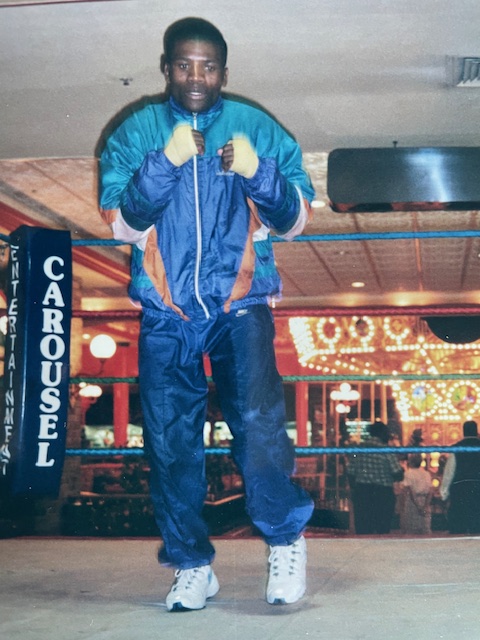
Bungu won his next four fights inside the distance before challenging highly rated American Kennedy McKinney for the IBF junior featherweight belt. They met at the Carousel Casino at Hammanskraal, near Pretoria, on August 20, 1994.
McKinney was an outstanding amateur who won the bantamweight gold medal at the 1988 Olympic Games in Seoul. He won the IBF belt from South African Welcome Ncita and made five successful defences.
The American, rated as one of the best fighters in the world pound-for-pound, was comprehensively outpointed by the unheralded Bungu, who produced one of the finest performances in a world title fight by a South African.
Roller-coaster ride
The bout started a roller-coaster ride for the new champion, who made 13 defences of the belt. This was a record by a South African, eclipsing the one he had shared with Brian Mitchell.
However, there were good and bad performances during that time. In his fist defence, against US-based Puerto Rican Felix Camacho, Bungu had problems with his opponent’s southpaw style but won easy enough.
In 1995, he retained the belt by beating Mohamed Nurhuda (Indonesia), Victor Llerena (Colombia) and Laureano Ramirez (Dominican Republic), all on points.
The next year he beat American John Lewis in Biloxi, Mississippi, before returning to his favourite venue at Hammanskraal to stop Colombian Pablo Osuna in the twelfth round and outpointing Jesus Salud from the Philippines.
In April 1997, in a return match with Kennedy McKinney, Bungu won by split decision in a 12-rounder that the McKinney camp thought their man had won.
Bungu had two more fights in 1997, beating Enrique Jupiter from Mexico and Arnel Barotillo from the Philippines on points.
On May 16 the next year, back at the Carousel, Bungu was below his best when he beat Colombian challenger Ernesto Grey on another split decision.
Back to his best in Atlantic City
Bungu was back to his best in October 1998 when he defeated former IBF flyweight and junior bantamweight champion Danny Romero in Atlantic City, New Jersey, USA. In retaining his belt for the twelfth time, he proved he was the best junior featherweight in the world.
Bungu was given less than a 50-50 chance of beating Romero, but after his fine performance there was talk of him facing ‘Prince’Naseem Hamed for the WBO ‘world’ featherweight belt.
However, Bungu first had to defend his IBF title against the mandatory challenger, Victor Llerena from Colombia.
On a memorable night, February 6, 1999, Bungu retained the belt for a record 13th time when Llerena failed to come out for the eighth round after taking a pounding from the champion.
The fight against Naseem
After the fight it was announced that Bungu was relinquishing the IBF title to challenge Hamed.
It took more than a year to finalise the bout. Bungu remained inactive before travelling to London to face Naseem on March 11, 2000.
The fight, regarded as one of the biggest in the history of SA boxing, was arranged by Rodney Berman’s Golden Gloves group, with Berman at the head of the contracted negotiations.
However, Bungu was never in the fight, attended by 10,000 spectators. His dream was shattered in 13 minutes and 38 seconds when he was knocked out in the fourth round.
The Bungu who fought Naseem was not the fighter his admirers knew.
Ron Jackson was with Bungu in London at the time and, travelling in the bus with him from his apartment in Lancaster Gate, it was clear to Jackson that the occasion was too big for him. Bungu began unravelling long before he entered the ring.
Hamed; as was his style, made a magnificent entrance into the arena, coming in on a flying carpet and somersaulting over the ropes. He even took the microphone from famed ring announcer Michael Buffer to address the crowd before the bell.
Bungu’s helpers shielded their man from his opponent. Ron felt he should have stood in the centre of the ring and eyeballed his opponent as he had done at the pre-fight press conference and at the weigh-in.
Fading from the scene
Bungu soon began fading from the scene, but did not officially announce his retirement.
About 16 months later, he returned to fight fellow-South African Lehlohonolo Ledwaba for the vacant WBU featherweight belt, but was well beaten over 12 rounds.
After an absence of ten months, on May 31, 2003, Bungu beat Takalani Ndlovu over ten rounds in an eliminator for an IBO featherweight title fight.
In a return match, in February the next year, they fought for the vacant title. Bungu beat Ndlovu on split decision to become a two-time “world” champion.
On June 25, 2005 he put up a brave performance against Thomas Mashaba but lost on points over 12 rounds to lose his IBO belt.
This was to be his last fight. He retired with a record of 39 wins and 6 losses, winning 19 bouts inside the distance. His story was a real fight from humble beginnings to the pinnacle of his sport. It should be celebrated and his achievements recognised further.
Below is an article as written after the fight on the above date.
Re-posted now in the lead-up to another big Wembley Stadium boxing event to whet the appetite.
On an evening of high emotion and extreme patriotism Britain’s Frank Bruno succeeded in his fourth attempt at gaining a version of the World Heavyweight Championship.
That it was gained some five miles from Bruno’s birthplace and at the hands of WBC champion Oliver McCall, whose victory over Lennox Lewis stunned the British boxing public a year earlier, was the icing on the cake.
The nationalistic scenes on the announcement of the … ‘New Heavyweight Champion…’ rivalled anything shown in recent months on the 50th anniversary of the ending of World War II.
The joint Don King/Frank Warren three-title fight card was the biggest ever show in England, befittingly staged at the country’s national sports stadium.
For thirteen years British ‘institution’ and perennial contender Frank Bruno has tried and failed to climb the peak of this profession. The paying public have endured the disappointments as if he were their own kinfolk. This coupled with the ridicule of some US trade magazines made the night in the end sweeter.
Fireworks, a laser show portraying the familiar British landmarks and, Nigel Benn carrying the Union ‘Jack’ accompanied a focussed Franklin Bruno MBE down a lofty floodlit ramp into the ring.
The fight transpired ………to the final round, with the following conclusion :–
Amid utter bedlam at ringside the champion failed to maintain the momentum at the start of the final round. After rising late, McCall merely pushed a desperate Bruno onto the ropes at which point he was smothered for most of the round. By now the champion was looping right hands in hope rather than expectation. Two minutes into the round Bruno managed to distance himself from his pursuer, showing real grit as he landed more scoring jabs. On the sound of the final bell the stadium went into a state of euphoria as the decision was beyond doubt. The miniature Union Jacks provided at ringside fluttered endlessly to await the final decision. For the record, the scoring was unanimous as the Brazilian and Mexican judges posted 117-111, and the Australian a closer 115-113.
On its announcement ticker-tape filled the air and a Busby headed Guards Band struck up Edward Elgar’s ‘Land of Hope and Glory’ augmented by the jubilant voices of the crowd.
The victory improved Bruno’s record to 40-4 (38 KOs) and the former champion McCall fell to 26-6 (18 KOs). In the post-fight interview the new champion was overcome with emotion.
He explained through tear filled eyes that if he’d won £10 million it would not mean more than this moment. He described McCall as ‘very tough’ and thanked everyone from the Queen to Don King !
Once the dust had settled the following day’s news announced Bruno would fight on, and meet Mike Tyson in an $100 million re-match.
Footnote: Bruno would go onto lose his title in his first defence to Mike Tyson in Las Vegas ( March 1996) and would retire, never fighting professionally again. He remains a ‘National treasure’. McCall was provisionally suspended post-fight for failing to provide a sample for drug analysis and would later go onto lose (February 1997) to Lennox Lewis in a rematch with him.
Japanese multi-weight king Naoya Inoue takes a further step to greatness.
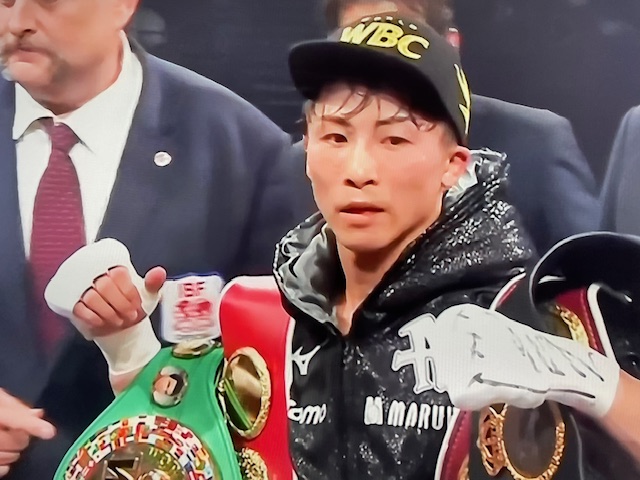
One look at the junior-featherweight (122lbs/8st, 10lb) Ring Magazine ratings shows it’s only a question of time before ‘The Monster’ Naoya Inoue (28-0,25 KOs) steps up to attempt to conquer a fifth weight class.
Within 18 months he’s almost cleaned out the division.
First up, in July 2023, was previously undefeated ‘world’ champion Stephen Fulton, followed by IBF champion Marlon Tapales that December, and finally, Luis Nery to unify all the titles in May 2024. All were stopped inside schedule. This was Inoue’s second undisputed world championship, with various world sanctioning body titles in the other two. He was though considered the king in all four.
To illustrate the quality of the defeated junior-featherweight opposition, all still have a combined record of 94 wins with only 7 defeats and, been retained in The Ring top six in that weight class.
Finally, on Tuesday in Tokyo, he forced Irishman T J Doheny to lose, an up until then competitive fight, in the seventh on a strange injury sustained to his right leg. Doheny appeared to take a punch to his hip and as he came off the ropes his leg gave way, causing the referee to wave it over.
The ending was a surprise, but given the sustained pressure and power punching the challenger consumed in the sixth and early seventh round, a stoppage may have been on the cards further down the stretch.
This was Inoue’s ninth consecutive world championship stoppage.
Doheny, who entered the fight at #7 in The Ring ratings, is unlikely to drop his stock significantly. However, a re-match will not happen.
‘The Monster’ Inoue, age 31, from Kanagawa near Yokohama, has looked beyond compare in all four already conquered weight classes. He is well on the way to legendary status.
Top Rank Boxing Chairman and hall-of-fame promoter Bob Arum, no stranger to hyperbole, recently referred to Inoue as the best fighter he’s seen. On current evidence and achievement this is hard to argue against, even given the rich seam of talent Arum has mined and promoted over his 60+ years in the boxing business.
The Japanese’ has already shown he is a generational talent.
Four pounds up at featherweight (126lbs/9st) the ‘world’ titles are split, with no dominant champion. England’s Nick Ball (20-0-1, 11 KOs), the WBA champion, possibly with greatest potential. A further appearance by Inoue in the U.K is an option, after his Scottish sortie in 2019.
Mexico’s Rey Vargas (36-1-1, 22 KO’s) has the greatest power and best resume, and a contest against him would be equally lucrative. Hopefully the draw of the U.K both financially and from a legacy aspect will tempt Inoue to those shores when he does inevitably step up in weight.
For the time being Bob Arum has hinted at a further defence in Japan in December, followed by a visit to U.S in 2025 for a “..big celebration in Las Vegas”. We wait in anticipation, but a move up to the featherweight division seems inevitable.
Tomorrow UK lunchtime (Sept 3), live from Tokyo, Japan, ‘The Monster’ returns !
Ring Magazine 2023 Fighter of the Year and four-weight world champion Naoya Inoue defends his undisputed junior-featherweight (122 pounds/8st, 8lbs) title against former IBF champion T J Doheny from Ireland.
The 31 year old Japanese, Inoue (27-0, 24 KOs), is a modern-day boxing phenomenon who transcends the sport in the Far East and is also ranked Ring Magazine pound-for-pound #1. The considered ‘best is the business’.
Last time out, he sold out the 40,000 Tokyo Dome for a boxing first time since ‘Iron’ Mike Tyson v James ‘Buster’ Douglas back in February 1990. Inoue emphatically stopped previous belt champion Luis Nery to become a four-weight divisional world champion. Two of those being undisputed.
Tomorrow’s fight is in the smaller Ariake Arena, a Tokyo 2020 Olympic venue. It’s the sheer staging of an Inoue fight that means he has to revert to the smaller venue this time, plus, the need for a ‘SuperFight’ against a more decorated or dangerous opponent. If the Yokohama phenomenon remains undefeated, which is expected, that is sure to come.
Doheny, (26-4, 20 KOs) a good southpaw, but aged 37, is likely to be outgunned by the hard-hitting Inoue. Probably emphatically, sometime before the 7th round.
‘The Monster’ machine should keep rolling on on as he continues to move through the divisions in the lighter weight classes. He has so far won ‘world’ titles from light-flyweight (108lbs/7st, 10lbs) up to his current top registered fighting weight. How far can he go ? is the big question…
Catch it tomorrow if you can. The majority of this Top Rank Inc. co-promoted card will be shown live on Sky Sports for most of Tuesday morning through to the lunchtime highlight main event.
Inoue is not to be missed and although he should come through convincingly, with boxing one never knows ! Enjoy.
This regular feature is to also raise awareness of the Ringside Charitable Trust.
One of today’s finest southpaws, world heavyweight champion Oleksandr Usyk (on left), with your editor.
Southpaws leave their mark
by Ron Jackson.
The number of top-class left-handed boxers seems to have increased notably in recent years.
Spectators and television viewers are often astounded when they see how many southpaws are fighting in tournaments; sometimes four, five or more.
No comparative statistics are available, but long-time observers agree that there are now more really good “lefties” than ever before. This may, incidentally, also be the case in cricket, tennis and other sports.
Three of the top ten boxers on Ring Magazine’s latest list of the best boxers in the world, pound for pound, are southpaws: Oleksandr Usyk, their heavyweight champion, four-weight champion Terence Crawford currently at junior-middleweight and, Junto Nakatani at bantamweight.
This, plus still ranked, “living legend” and former eight-division champion Manny Pacquiao.
The word “southpaw”, according to one popular theory, comes from baseball. It is said that “ball parks” were designed so that the batters faced east so that they did not have to look into the late-afternoon sun.
With the pitchers operating from east to west, the left-handers used the “paw” on the south side of their body. Their right hand and right foot were, therefore, in front of their body, similar to the stance of southpaw boxers.
However, etymologists say the word “southpaw” was used years before baseball was first played.
One of the earliest southpaws of note was Ned Turner, a prize-fighter in the era of bare-knuckled boxers. He weighed about 65 kg and boxed from 1810 to 1824; often against much heavier opponents.
Turner was born in London in 1791 but because his parents were from Wales he was often referred to as a Welshman. He died in 1826.
LEFT-HANDED PIONEER
William Thompson, known as “Bendigo” and born in Nottingham on October 11 1811, was one of the earliest southpaw champions. He won the England championship twice – on February 12 1839 when he beat James “Deaf” Burke and on September 9 1845 when he defeated Ben Caunt.
Thompson retired because of a knee injury after winning the title for the first time. He was 34 when he fought Caunt, who went down without being hit and was disqualified in the 93rd round.
After bare-knuckle boxing made way for the “gloved” era, Tiger Flowers became one of the best-known southpaws of his time. The “Georgia Deacon” became the first black to win the world middleweight title when he beat Harry Greb on points over 15 rounds in February 1926.
He lost the title to Mickey Walker and died in New York on November 16 1927 after an eye operation.
Freddie Miller, who fought from 1927 to 1940 and compiled a record of 212-27, with six draws, one no-contest and 44 wins inside the distance, was an outstanding left-hander.
He won the National Boxing Association’s version of the world featherweight title by beating Tommy Paul on points in January 1933. He made three defences before beating Britain’s Nel Tarleton to gain full recognition as world champion in June 1935.
Miller defended the title five times before losing it to Petey Sarron in May 1936.
OTHER CLASSY SOUTHPAWS
Kayo Morgan – born Andre Ettore Esposito on May 12 1909 – was the son of Italian parents who lived in Connecticut. A classy southpaw, he made his debut at the age of sixteen. He never won a world title but fought champions such as Panama Al Brown, Sixto Escobar and Benny Lynch in a 142-fight career.
Lew Tendler also never won a world title but was one of the best southpaws of his time, competing in 171 fights between 1913 and 1928. He took world lightweight champion Benny Lenard to close decisions in two fights.
Al McCoy won the world middleweight title in April 1914 when he knocked out George Chip in the first round. Also a southpaw, he remained the champion until he was knocked out in the sixth round in a fight against Mike O’Dowd in November 1917.
Harry Greb, who had 299 fights, according to the Ring Record Book, won and lost the world middleweight title to southpaws. He beat Johnny Wilson on points in August 1923 and lost, also over 15 rounds, to Tiger Flowers in February 1926.
Among the southpaws who won world titles after Greb were welterweight Lou Brouillard (1931 to 1932), lightweight Juan Zurita (1944 to 1945), bantamweight Jimmy Carruthers (1953 to 1954) and junior lightweight Flash Elorde (1960 to 1964).
Then came junior welterweight Duilio Loi (1960 to 1963) who finished with a record of 115-3, including only eight knockouts, flyweight Hiroyuki Eibihara (1963 to 1964), featherweight Vincente Saldivar (1964 to 1970) and junior welterweight Sandro Lopopolo (1966 to 1967).
Another excellent southpaw was three-time light-heavyweight champion Marvin Johnson who fought from 1973 to 1986 and beat Mate Parlov for the WBC title, Victor Galindez for the WBA title and Lesley Stewart for the vacant WBA title.
HAGLER, CALZAGHE AND CAMACHO
Two of the best left-hand champions were undisputed world middleweight king ‘Marvelous’ Marvin Hagler (1980 to 1987) and elite lightweight champ Pernell ‘Sweet Pea’ Whitaker (1989 to 1991).
Add to this American Ronald ‘Winky’ Wright who held the WBO and WBC middleweight belts and Wales’ Joe Calzaghe who was another fine “lefty”.
The Welshman fought from 1993 to 2008 and finished with a record of 46-0 after winning 21 title fights as WBO super-middleweight and IBF, WBA and WBC super-middleweight champion.
British-Yemeni, ‘Prince’ Naseem Hamed, who held various titles between 1995 and 2000, was regarded for a while as the No 1 featherweight in the world, His only loss in 37 fights was to Marco Antonio Barrera. Hamed made 15 successful defences of his titles.
Hector Camacho, also a highly rated southpaw, lost six times in 88 fights but won titles in the super-featherweight, lightweight and super-lightweight classes.
Antonio Tarver, who is still active as a cruiserweight, won the light-heavyweight crown four times. And Argentina’s Sergio Martinez, who retired recently, won a version of the middleweight title.
INCOMPARABLE PACQUIAO
But none of them achieved what Manny Pacquiao did. The Filipino, a future Hall of Fame hero, has won ten versions of ‘world’ titles in eight divisions. He will be remembered as one of the best southpaw champions in history.
Orthodox boxers often try to avoid southpaws because of their “abnormal” stance. They have good reason to do so, as shown when South African Corrie Sanders knocked out Wladimir Klitschko to claim the WBO heavyweight belt in the second round in March 2003.
In years gone by, when there were not as many southpaw boxers as there are now, some trainers even tried to convert “lefties” to the orthodox stance, saying theirs was an incorrect way of boxing.
Among the world champions who converted from southpaw to the orthodox stance were James J Corbett, Carmen Basilio and Oscar De La Hoya.
And, even in the movies, Rocky Balboa was one of the most famous southpaws of all-time ! With his trainer Mickey famously saying to him they “Shoulda’ been drown at birth !”.
Harsh, but southpaws or “lefties” have been a much welcome addition throughout boxing history.
Today, I’d like to extend a warm welcome to Ron Jackson, the esteemed and talented South African boxing writer, to The Undisputed website.
Ron is a personal friend and has a wealth of experience having written over the many years of boxing history both as a fight fan and aficionado. He regularly contributed to The Ring magazine as an overseas correspondent, wrote for South African Boxing World and has contributed to SuperSport television station and fightnews.com website in recent years.
Ron is a boxing historian with an extensive personal collection and has kindly offered to occasionally share some of his articles and knowledge with The Undisputed readers. His first follows:
Title bout declared a non-fight
by Ron Jackson
Most critics and fans who complain about boring bouts probably don’t know about the night a champion retained his title in a non-fight.
The champion failed to beat the challenger and neither did they draw in a tournament that was held abroad because they were not allowed to fight in their own country.
The result was one of the strangest in the long history of Commonwealth boxing. The referee was so frustrated by the lack of action that he sent both boxers to their corners and declared their “fight” a no-contest.
It happened in 1961 in what is now Zambia, where two South Africans, Dennis Adams and John Mthimkulu, were supposed to fight for the Commonwealth flyweight title.
Adams, known as a devastating puncher, was from Johannesburg. The challenger, who held the “non-white” version of the SA flyweight title, was from Vereeniging. But because of the SA government’s laws at the time the fight was held at the Luanshya Welfare Grounds in what was then Northern Rhodesia.
The irrepressible Adams had travelled to Scotland in 1957 to challenge the British and Empire flyweight champion, Frankie Jones, in the Kelvin Hall in Glasgow on October 23.
Adams went after the champion from the start, swinging wildly until one of his punches landed, knocking the Scot out in the third round.
The new champion retained the title against Warner Batchelor and Les Smith before a defence was arranged against Mthimkulu. Most boxing enthusiasts expected an exciting clash and the spectators were waiting for fireworks.
Adams had his right hand cocked from the start, waiting to trigger the punch that had brought him 14 knockouts in his previous fights. But Mthimkulu, well aware of the danger, kept back-pedalling and tied Adams up in clinches.
As the fight progressed, the clearly unfit Adams had to resort to holding to prevent his opponent from landing scoring punches.
‘STEP BACK AND FIGHT; STOP HOLDING’
Referee Duggie Miller, a former leading SA middleweight, kept asking the boxers to break out of the clinches, to step back and fight. Time and again he told them to stop holding on to each other.
By the sixth round, Miller had had enough. He sent both fighters back to their corners and signalled that he had called off the “fight”. However, with just about everyone pleading with him to let the boxers carry go on, Miller reversed his decision.
The bout resumed, and so did the holding and clinching. It turned into a farce and in the ninth round Miller stepped in again and declared it a “no-contest”.
The partisan crowd accepted Miller’s decision although many felt Mthimkulu would have won had the fight gone the distance.
According to newspaper reports, Miller explained: “I warned both boys for repeated clutching, holding and pushing in the clinches. I tried to keep them apart, as the public came to see boxing, not wrestling.”
Two undercard fights produced interesting results. Levi Madi was reported to have been extremely unlucky not to come away with a draw against SA lightweight champion Charlie Els and Young Sebela stopped former SA welterweight champion Benny Nieuwenhuizen in the fifth round.
In the last bout, Spider Kelly, who later held the SA welterweight title, beat Katanga lightweight Marcel Tumba. It was Kelly’s third professional fight.
Only days later, on May 31 1961, South Africa became a republic and SA boxers were no longer eligible to hold or fight for Empire titles.
Adams, a real character, delivered a memorable response to questions about losing his title as a result of political changes. “Yes, it took a heavyweight called Hendrik Verwoerd to do it,” he said, referring to the SA prime minister who led South Africa out of the Commonwealth.
We should savour multi-weight world champion Terence Crawford whilst we can. For many, he is the pound-for-pound best boxer in the world.
Despite the proven quality and achievements of Ukraine’s Oleksandr Usyk and Japan’s Naoya Inoue, it’s hard to argue against Omaha, Nebraska’s ‘Bud’ Crawford being P4P king, to most observers.
Tomorrow night in Los Angeles, at age 36, he has his 41st fight, having compiled a flawless 40-0 (31 KOs) record as a pro, and never looking close to being beaten.
It is though only his first outing in just over a year. His last appearance being a historic seventh round stoppage victory over previously undefeated WBC welterweight champion Errol Spence Jr. in a much anticipated ‘superfight’. That to unify the 10st, 7lbs (147lbs) title and win a world title in a third weight class.
Tomorrow he goes for his fourth and to secure his name further in boxing history.
Victory though is no ‘given’. He will face Uzbekistan’s Israil Madrimov (10-0-1, 7 KOs) for his WBA ‘world’ title at 11st (154lbs). At 29 years old, the Uzbek is a strong champion and should provide a stern test.
It’s hard though to see past a Crawford victory and a further enhancing of his achievements and reputation. Madrimov is a ‘live’ opponent and although has been relatively inactive himself, has youth and size on his side. He’s campaigned exclusively at 11st and has a good amateur background.
He could shock the boxing world, but the odds are on a Crawford late stoppage or clear points victory.
The fight and supporting card is being bankrolled by The Kingdom of Saudi Arabia, forming part of their Riyadh Season (albeit an overseas promotion) and is available on the DAZN streaming site as a pay-per-view event (Box Office in the UK).
The main event is interesting enough, but it has a strong undercard with some heavyweight meetings of world significance, including Andy Ruiz v Jarrell Miller and Martin Bakole v Jared Anderson, among others. Crawford though is the main draw and your outlay should not disappoint.






 The Undisputed