
On an unforgettable day like today when thoughts across Europe and in Allied countries are on the 80th anniversary of the D-Day landings on the Normandy coast of France, starting the “beginning of the end” of World War II, let us consider boxing’s role in the bigger conflict. In particular that of the boxers who served and the many who sadly lost their lives.
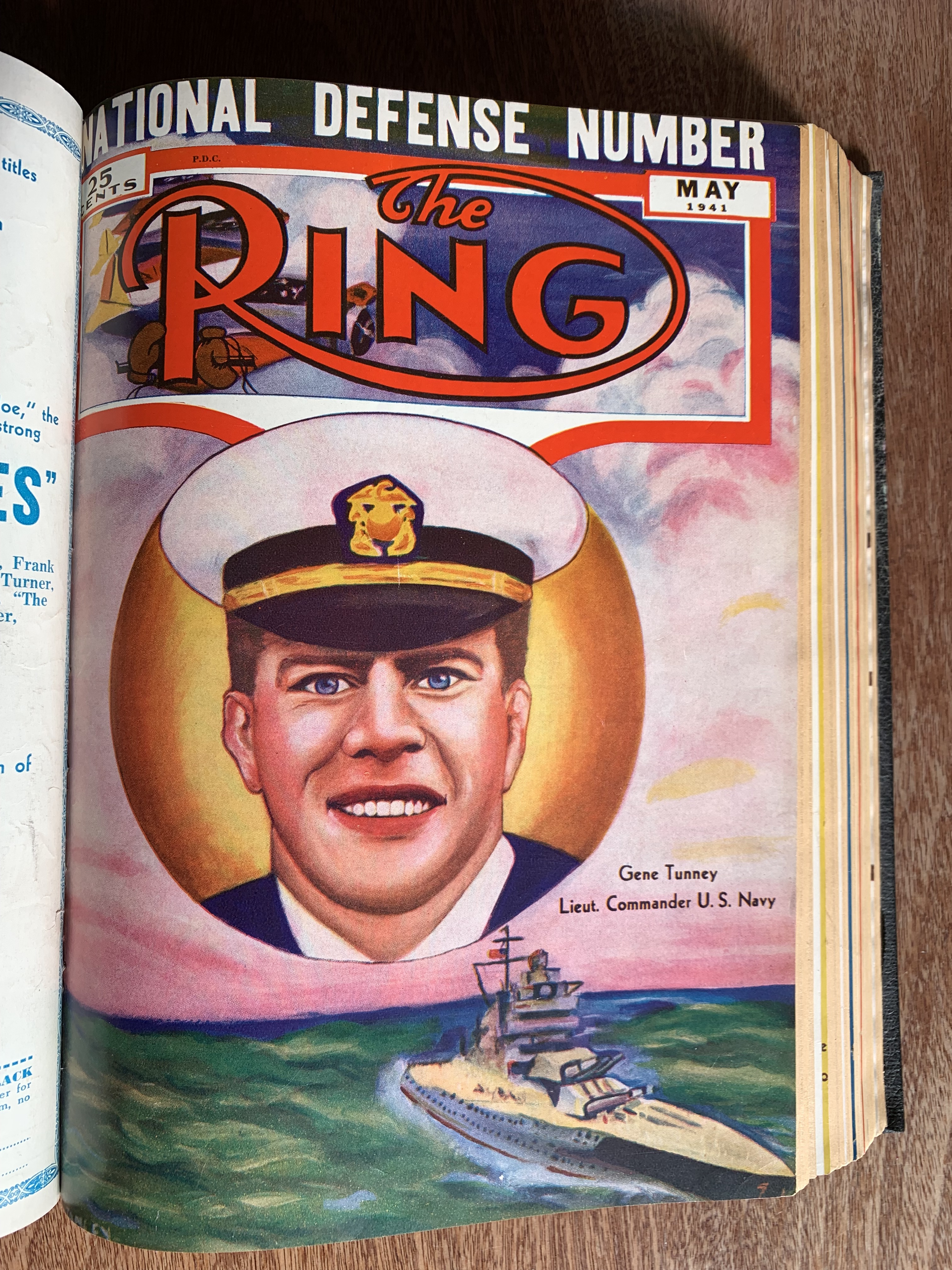
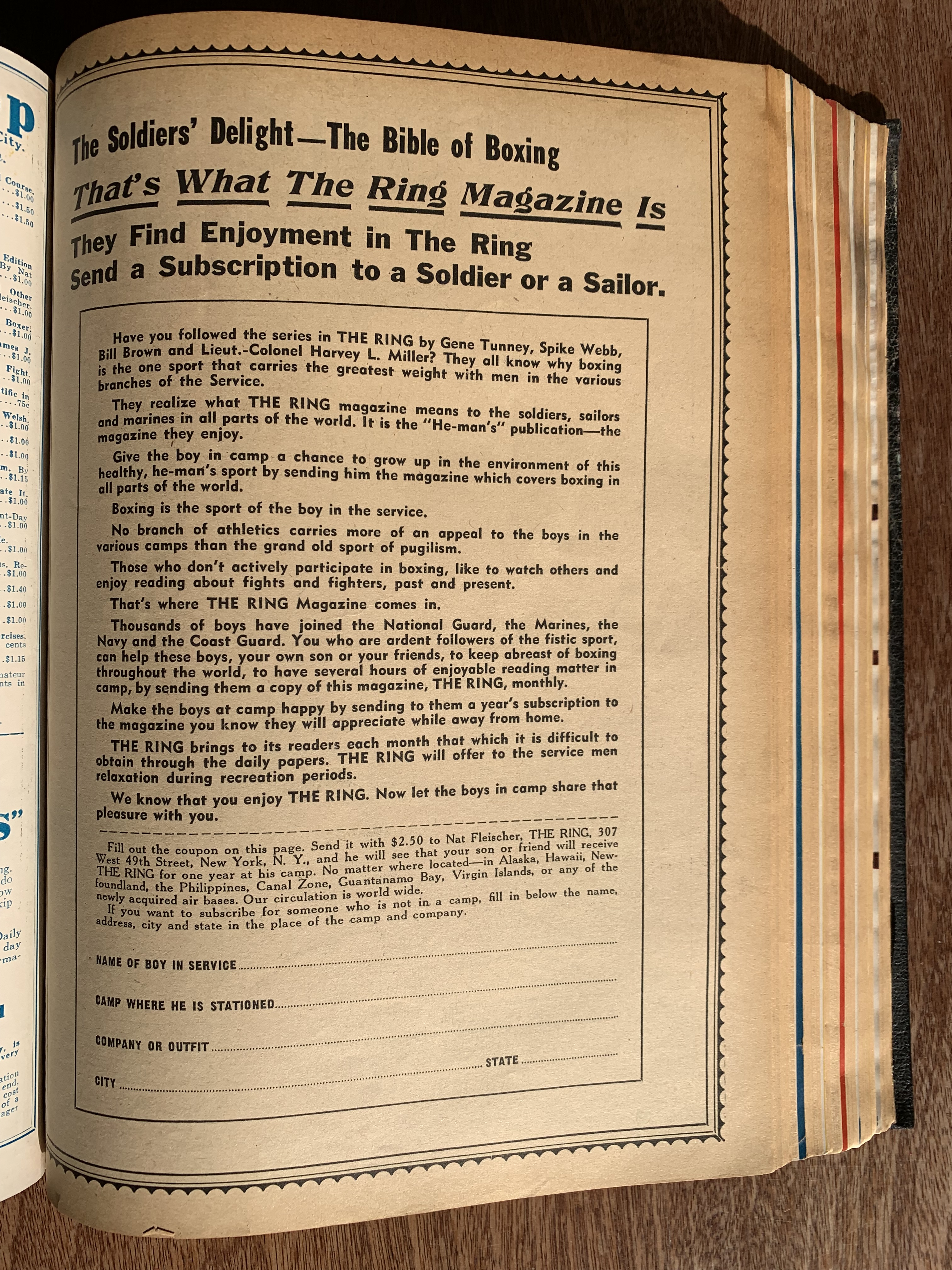
The images above, courtesy of The Ring magazine, show how World War II (WWII) influenced its participants and its readers’ state of mind over the six years of conflict (1939-45) in Europe. Ultimately solidified with the 1941-45 US involvement after the surprise Imperial Japanese invasion of Pearl Harbor, Hawaii on 7 December 1941. Immediately fighters and the world united in opposition to the Nazi brutality occurring across Europe and by their Japanese counterparts in the Far East.
The images above are from the May 1941 edition (after Pearl Harbor). The former, then-retired, heavyweight champion of the world Gene Tunney was centre stage after his enrolment in the US Naval Defence Force, previously serving in their Marines, which he cited for his earlier boxing education. Among boxers, he was not unique at those times.
He was joined by such notables as the reigning heavyweight champion of the world Joe Louis who combined his ring career of title defences by performing boxing exhibitions across the US to servicemen. It was only as the war effort and hostilities deepened in 1943 that he failed to make a boxing world title defence.
He was much loved for his patriotism through life and, on death, one of his lasting epitaphs was that “He was a credit to his race, the human race”.
In 1942 alone, the ‘Brown Bomber’ is on record as donating $65,200 and $45,882 of his purse for two separate title defences to the Naval and Army Relief Fund respectively. No truer is his patriotism exhibited and, in many American eyes, this contrasts sharply with Muhammad Ali’s refusal to step forward on being drafted to Vietnam in the late 1960’s.
Louis was undeniably an American hero throughout life and remains so in death. Whenever this writer goes to Caesar’s Palace hotel and casino in Las Vegas, a photograph alongside the larger than life marble statue of the ‘Brown Bomber’ is a must do.
Other legendary boxers who put their careers on hold during WWII and entered the armed services whilst in their heyday included future world lightweight hall-of-famers Barney Ross and Beau Jack, along with light-heavyweight Billy Conn. All were featured on the cover of The Ring in the war years wearing military uniform, along with senior military personnel. The Allied Forces Supreme Commander Gen. Dwight D. Eisenhower appeared on the cover in February 1944.
The previously stated fighters were joined by reigning world lightweight champion Lew Jenkins who re-joined the US cavalry and, in Britain, light-heavyweight champion Len Harvey who re-entered the Royal Navy. There were many other examples across all weight classes and with varying fistic abilities. It was all hands to the pump literally.
The sport in Britain was effectively put on hold for four years with other matters of national security and understandably the saving of lives taking priority.
Another notable military participant was the, then recently retired, three-weight world champion, Henry Armstrong who represented the US Army. ‘Homicide Hank’s’ face adorned many covers of The Ring at that time and was held in even higher esteem.
On the German side former world heavyweight champion Max Schmeling was considered the oppressor supreme. This despite him never notably defending or supporting the action of the Nazi’s. His defeat to Joe Louis in the June 1938 rematch was widely considered a victory for the ‘freeworld’ and for all that was deemed ‘right’. At the time with war on the horizon Louis dared not lose, and he delivered emphatically KO’ing his rival.
Over the WWII years the covers of the esteemed Ring magazine would show images and sketches of fighters monthly in military uniform and adverts for Defence & War Bonds/Stamps would be a common feature. Inside, as in the right hand image above, there was an invitation for readers to subscribe on behalf and in the name of a serving soldier or sailor. Definitely it was an unprecedented time, in a thankfully to date not replicated era.
This went on for the whole four years that the US was involved and it was the D-Day landings that started the snowballing effect that eventually ended hostilities.
Only on the German and Japanese surrender in 1945 did military hostilities start to cease and those boxers return to the ring. The aforementioned fighters were revered for evermore for their patriotism and participation. The boxers who sadly lost their lives during the six years of conflict can never be listed in full, but their bravery, as previously exhibited within the ring, can never be doubted.
Boxing ultimately played a large part in the war effort and Allied victory by virtue of the bravery, high profile and morale raising potential of the individuals concerned. Also, by the values of discipline, fitness and dedication installed in fighters from an early age, which easily transferred across to military conflict, in the hours and years of need.
As followers of the sport of boxing and, especially today after 80 years, we should all be proud of that.
 The Undisputed